Sofia Bauer · 11 October 2026
Poland's Campus Green Initiatives Spark Unexpected Shifts in Student-Led Innovation Hubs
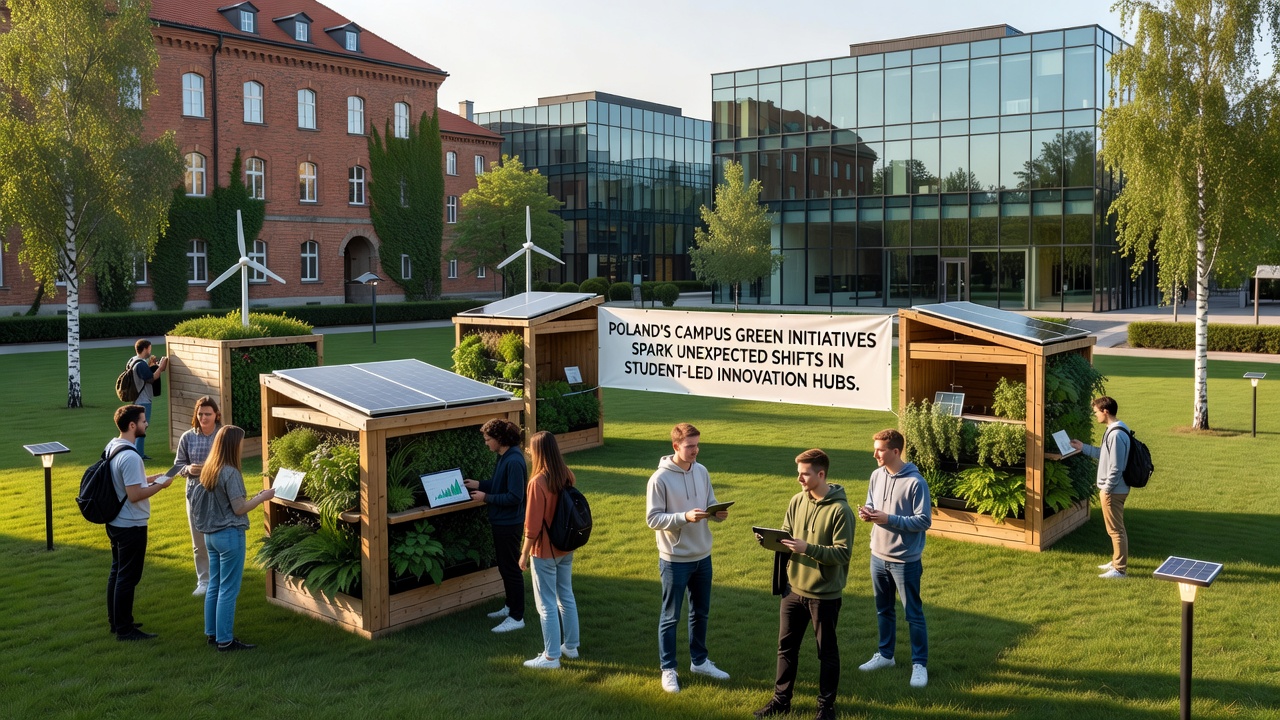
Polish universities began rolling out campus green initiatives in the early 2020s, and by October 2026 those programs have produced measurable changes in how students organize innovation hubs focused on sustainability, renewable energy, and circular economy solutions. Data from the Polish Ministry of Education and Science shows that over 45 campuses now operate dedicated student-led facilities where participants develop prototypes, run pilot projects, and attract seed funding from regional partners. The initiatives started with simple measures such as energy audits, waste reduction targets, and solar panel installations, yet they quickly evolved into platforms that channel student creativity into structured entrepreneurial activity.
Origins and Early Implementation
University administrators across Warsaw, Kraków, and Wrocław introduced green policies after the European Union updated its 2030 climate targets, and institutions responded by allocating portions of their operating budgets to sustainability upgrades. Researchers at Jagiellonian University documented that student participation in these projects rose 62 percent between 2022 and 2025, with many participants forming teams that later registered as startups. The pattern repeated at the University of Warsaw, where a campus-wide recycling program expanded into a materials science lab managed entirely by undergraduates and recent graduates. Observers note that the shift occurred because green infrastructure projects required interdisciplinary input, pulling together students from engineering, business, biology, and design departments who then continued collaborating after the initial installations were complete.
Emergence of Student-Led Hubs
By mid-2025 several campuses had converted underused buildings or sections of libraries into innovation spaces branded around green themes. At Poznań University of Technology a former storage facility now houses a student-run center that tests biodegradable packaging and low-energy sensors, while similar facilities at Gdańsk University of Technology focus on offshore wind components and battery recycling. Figures from the European Environment Agency indicate that Polish student hubs have secured approximately 18 million euros in combined grants and private investment since 2023, with the majority directed toward hardware prototypes rather than software-only ventures. What's interesting is how the physical green upgrades created shared meeting points where informal conversations turned into formal project proposals, and university administrators responded by adjusting internal policies to give student teams priority access to lab equipment during evenings and weekends.
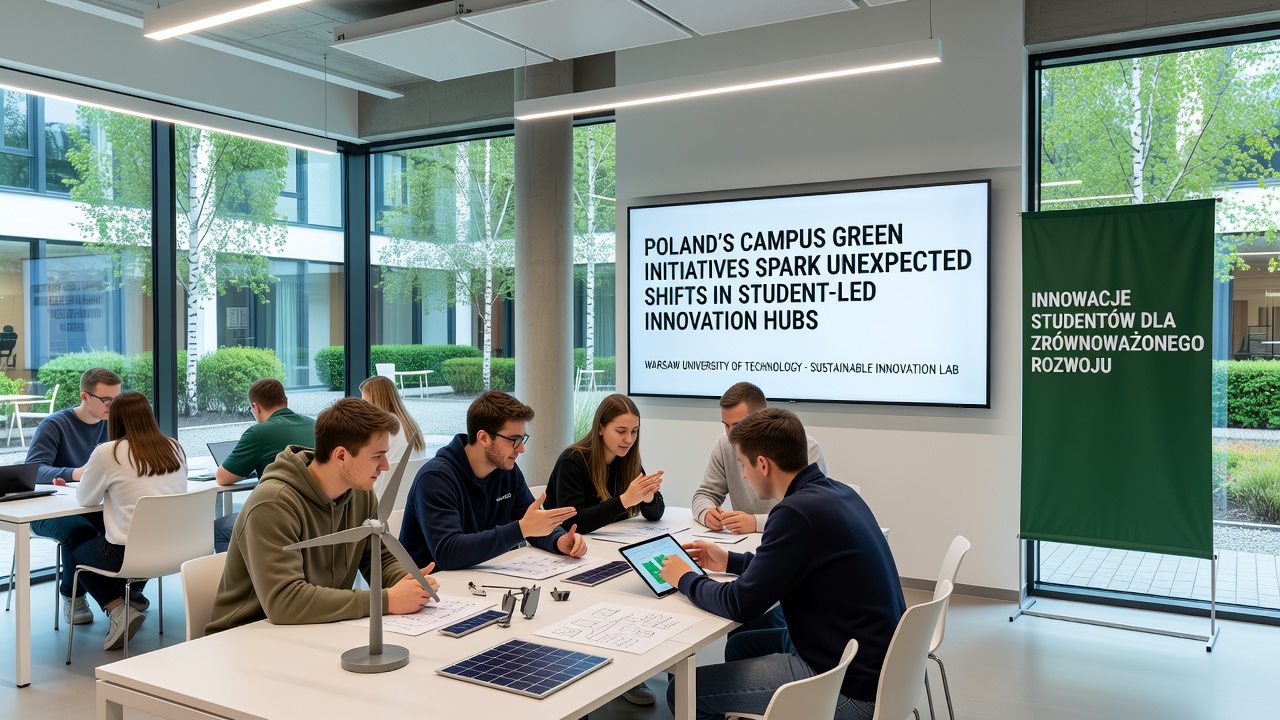
Take one case at Łódź University of Technology, where a group formed after a campus tree-planting campaign and went on to develop a modular vertical farming system that now operates in three Polish cities. The team credits the original green initiative for providing both the physical space and the initial contacts with municipal agriculture departments. Similar stories surface at smaller institutions, including the University of Warmia and Mazury, where students transformed a disused greenhouse into a research station studying algae-based biofuels. These examples illustrate how environmental projects served as entry points that lowered barriers for students who lacked prior startup experience.
Broader Patterns Across Regions
National statistics compiled in October 2026 reveal that student-led hubs in Poland now number more than 70, up from roughly 25 in 2023. The growth appears most pronounced in technical universities, although liberal arts institutions have begun forming partnerships to supply design and policy expertise. Data released by the OECD shows that Polish hubs have filed 340 patent applications related to sustainable materials and energy storage since the start of 2024, a figure that exceeds the combined total from the previous five years. External funding sources include regional development funds administered by the Polish government as well as grants channeled through Horizon Europe programs. One study from the University of British Columbia found comparable patterns in Canadian campuses where green retrofits preceded rises in student entrepreneurship, suggesting the Polish experience aligns with trends observed elsewhere when institutions tie sustainability goals to innovation infrastructure.
Administrators report that the hubs operate with minimal central oversight, allowing teams to set their own governance rules and revenue-sharing models. This autonomy has produced variation: some hubs emphasize open-source hardware, while others pursue commercial licensing agreements with local manufacturers. The result is a decentralized network in which ideas move between campuses through student conferences and online repositories rather than through formal university channels.
Challenges and Adjustments
Despite the expansion, participants encounter recurring obstacles around intellectual property rights and access to advanced testing equipment. Several hubs have negotiated memoranda of understanding with their host universities to clarify ownership of student-developed technologies, and others have established relationships with private laboratories for specialized analyses. Funding cycles remain a point of friction because many grants favor established research groups over student collectives, prompting some teams to register as independent nonprofits. Those who've studied the sector note that the green initiatives continue to provide a steady pipeline of new participants, offsetting turnover as graduates move into industry roles or advanced degree programs.
Conclusion
Poland's campus green initiatives have functioned as catalysts that reorganized student activity into sustained innovation efforts, with measurable increases in prototype development, patent filings, and cross-institutional collaboration by October 2026. The developments rest on concrete infrastructure investments and policy adjustments rather than abstract encouragement, and the resulting hubs demonstrate how environmental programs can generate secondary effects in entrepreneurship and applied research. Continued tracking by national and European agencies will show whether these patterns persist or evolve as funding priorities and student demographics shift in coming years.