Logan Hartmann · 27 September 2026
Poland's Lecture Halls Evolve as Tech Integration Meets Shifting Student Expectations in Unexpected Ways
Polish universities have incorporated digital platforms and interactive hardware into lecture halls over recent years, and this development aligns with evolving preferences among students who seek flexible access to course materials alongside real-time collaboration features. Institutions in major cities such as Warsaw and Krakow report widespread adoption of systems that combine traditional instruction with cloud-based resources, while data from the European Commission shows increased investment in educational technology across the EU region.
Core Technological Upgrades in Lecture Spaces
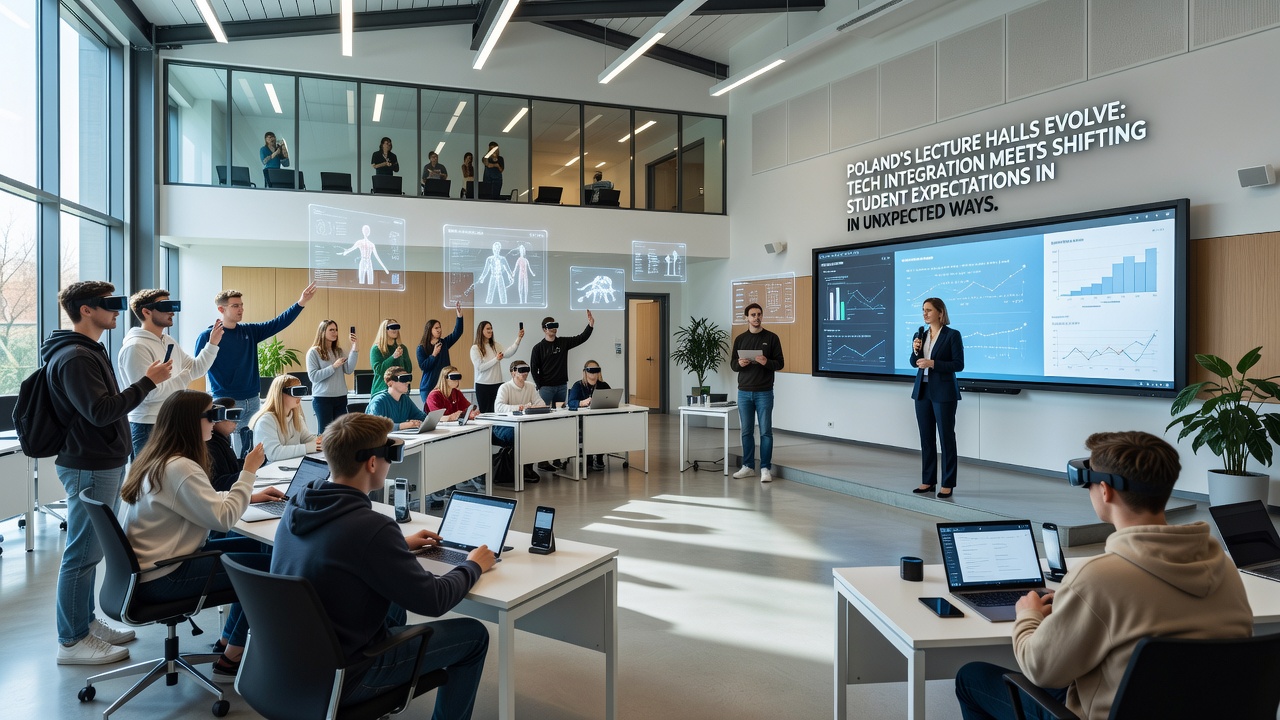
Many lecture halls now feature multi-screen setups that allow instructors to display live data visualizations, recorded segments, and student-submitted content simultaneously, and these configurations support hybrid sessions where remote participants join through integrated video systems. Universities have rolled out AI-assisted note-taking tools that transcribe lectures in multiple languages, which addresses the needs of international cohorts studying in Poland. Observers note that physical seating arrangements have shifted toward modular designs, enabling quick reconfiguration for group projects or individual device use during classes.
September 2026 marks the start of a new academic cycle where several Polish institutions plan to expand virtual reality modules in subjects like engineering and medicine, and these additions build on pilot programs that demonstrated improved retention rates according to internal university assessments. Students access course content through unified apps that sync with university servers, reducing reliance on printed materials while maintaining options for offline downloads.
Shifts in Student Expectations and Their Impact
Current cohorts expect lecture content to incorporate instant feedback mechanisms such as live polling and adaptive quizzes, and these tools have prompted faculty to adjust pacing based on aggregate response data collected during sessions. Research indicates that Polish students increasingly value opportunities for cross-border virtual exchanges, which has led some universities to partner with platforms that connect classrooms in different countries during scheduled lectures. This integration extends beyond basic connectivity, as systems now track participation metrics that inform personalized study recommendations.
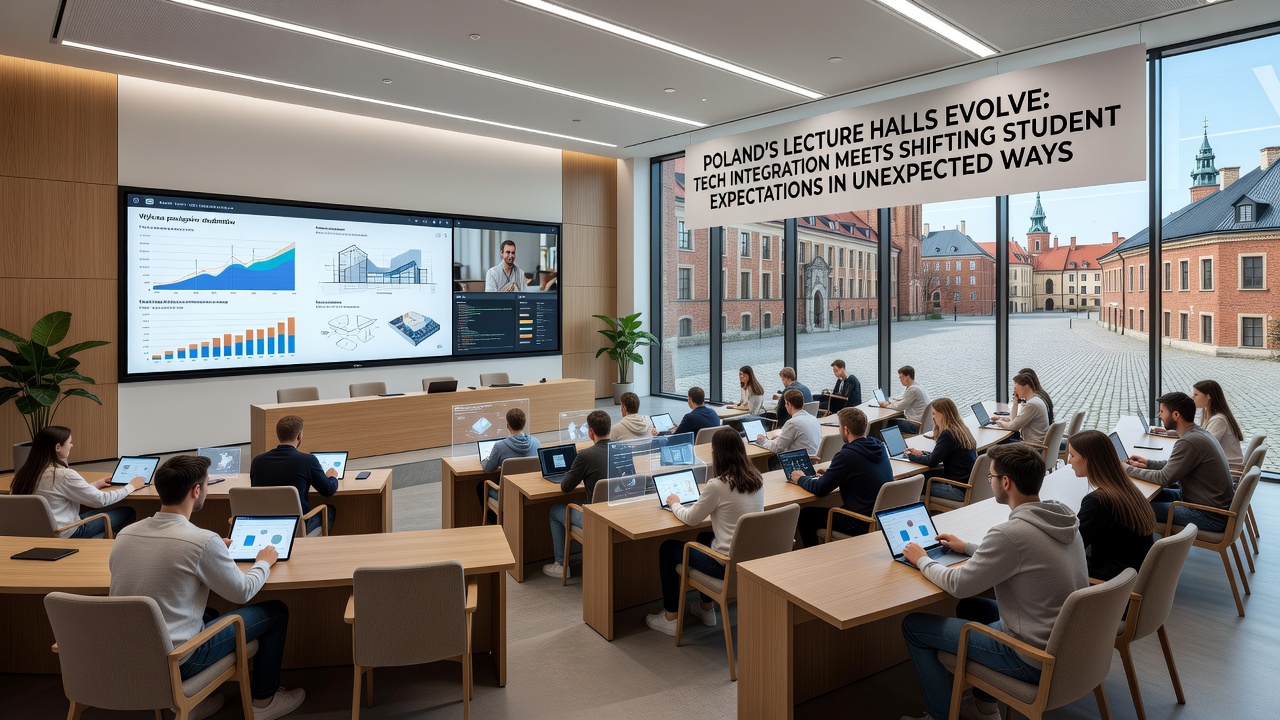
Unexpected patterns have emerged where tech integration influences social dynamics within lecture halls, for instance through shared digital workspaces that encourage quieter students to contribute via text alongside verbal discussions. Data shows higher attendance in courses that blend in-person and digital elements, yet administrators continue to monitor how these changes affect overall engagement levels. OECD findings reveal similar trends in higher education systems elsewhere, highlighting comparable adaptations in lecture environments.
Broader Institutional Responses and Data Trends
Polish higher education providers have formed working groups to evaluate privacy protocols around student data generated by classroom technologies, and these efforts respond to regulatory frameworks that emphasize secure handling of personal information. Enrollment figures from recent years reflect sustained interest in programs that offer robust digital infrastructure, with some faculties reporting that applicants specifically inquire about available tech resources during admissions processes. Faculty training programs focus on effective use of these tools, incorporating workshops that demonstrate how to maintain instructional quality while leveraging new capabilities.
Case examples include departments at the University of Warsaw that introduced sensor-based lighting and climate controls in lecture halls, which adjust automatically based on occupancy and support extended sessions without excessive energy use. Such modifications coincide with student requests for sustainable campus operations, and they represent one avenue where tech meets practical daily needs. Studies from Canadian research centers on digital learning environments provide comparative insights that Polish planners reference when scaling similar initiatives.
Conclusion
Developments in Polish lecture halls continue to reflect ongoing alignment between technological capabilities and student requirements, with September 2026 serving as a reference point for expanded implementations. Institutions maintain records of adoption rates and outcome measures, which guide further refinements in both hardware and software applications. These changes position lecture spaces as dynamic environments that accommodate varied learning approaches while preserving core academic functions.