Bianca Patterson · 13 September 2026
Poland's Matura Score Disparities Spark Localized Tutoring Pilots in Rural Provinces
Poland's national Matura examination continues to highlight persistent performance gaps between students in urban centers and those attending schools in rural provinces, prompting several regional authorities to launch targeted tutoring initiatives. Recent data compiled by the Central Statistical Office of Poland shows average scores in mathematics and Polish language sections remain lower in areas such as Podlaskie and Świętokrzyskie compared with results from Warsaw or Kraków districts, and these patterns have held steady across multiple examination cycles.
Exam Structure and Regional Patterns
The Matura serves as the primary gateway to higher education in Poland, requiring written and oral components across core subjects, while optional advanced papers determine eligibility for competitive university programs. Observers note that access to preparatory resources varies significantly by location, with rural schools often operating with fewer specialized instructors and limited after-school support networks. Figures released by the Ministry of National Education for the 2025 session indicated that 12 percent fewer students from villages passed the advanced mathematics paper on their first attempt than their counterparts in cities exceeding 100,000 residents.
Analysts at the Institute of Educational Research have tracked these outcomes through longitudinal studies spanning the past decade, revealing that transportation barriers and smaller class sizes in countryside lycées contribute to reduced exposure to exam-style practice materials. One study released in early 2026 documented that only 38 percent of rural schools offered dedicated Matura preparation clubs, whereas the corresponding rate in provincial capitals reached 71 percent.
Launch of Localized Pilot Programs
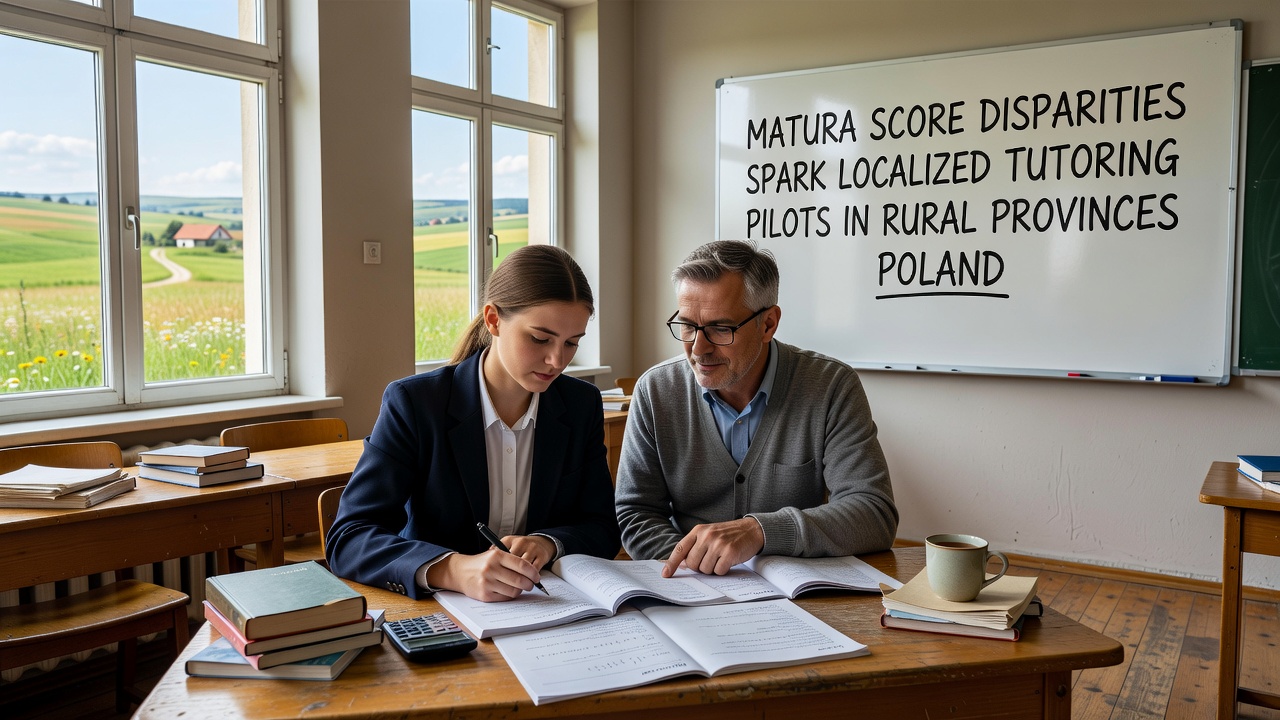
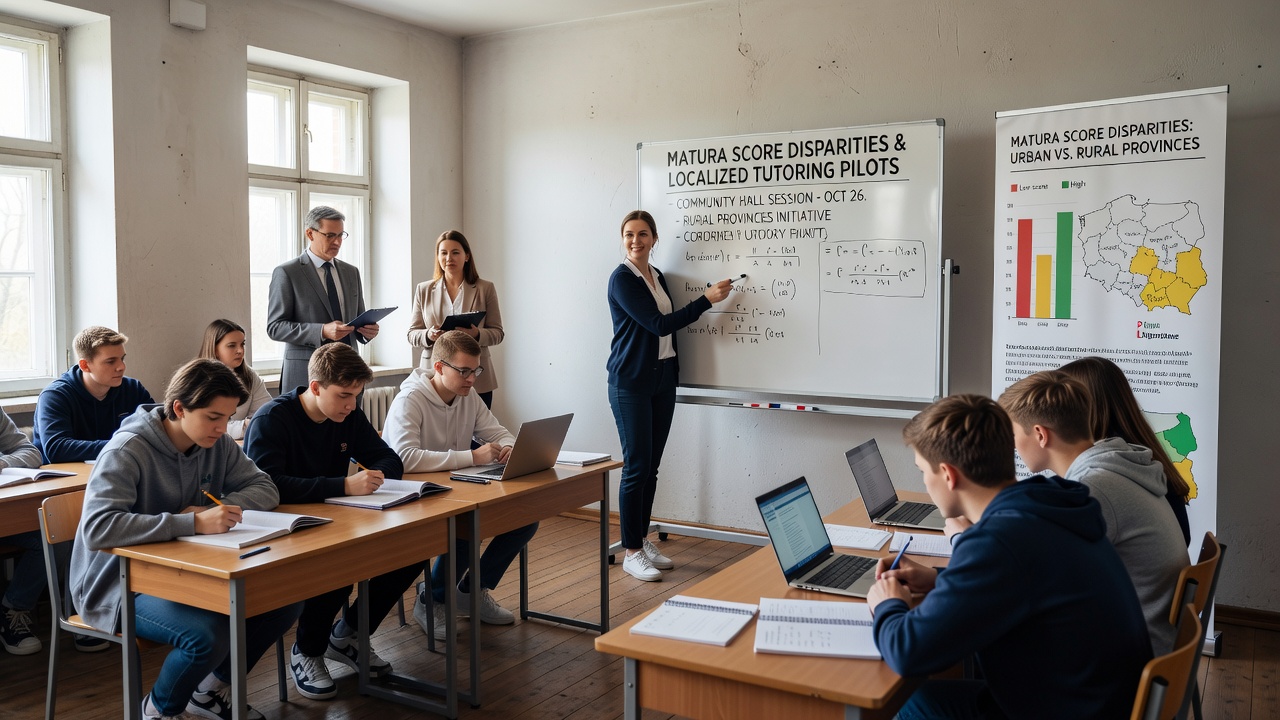
In response to these documented imbalances, education departments in three eastern provinces announced tutoring pilots scheduled to begin operations in September 2026. The programs recruit university students and retired teachers to deliver weekly sessions focused on core Matura subjects, using modular lesson plans adapted to local curriculum pacing. Funding for the initial phase draws from regional development grants allocated under the European Social Fund Plus framework, which supports educational equity projects across member states.
Each pilot site pairs participating schools with nearby higher-education institutions, allowing tutors to travel to remote locations rather than requiring students to commute. Early registration data collected by the Podlaskie Voivodeship education office shows over 2,400 secondary students signed up for the first semester, representing roughly one-third of the eligible cohort in the targeted communes.
Implementation Details and Monitoring
Program coordinators emphasize flexible scheduling that accommodates seasonal agricultural work common in rural areas, with sessions offered both after regular school hours and on weekend mornings. Materials developed for the pilots incorporate past Matura papers alongside digital resources hosted on a shared platform maintained by the National Centre for Supporting Vocational and Continuing Education. Progress will be tracked through quarterly assessments aligned with the standard Matura grading rubric, and results will feed into an annual evaluation report submitted to the Ministry of National Education.
Similar initiatives have operated on a smaller scale in Lubelskie province since 2023, where participating students recorded an average increase of 4.2 percentage points on practice examinations compared with non-participants from the same schools. Those earlier efforts relied on volunteer networks rather than paid tutors, yet they provided the operational template now being scaled in the new pilots.
Data Sources and Comparative Context
Comparative analyses published by the OECD place Poland's urban-rural Matura gap within broader European patterns observed in PISA assessments, where socio-economic background continues to correlate with performance differences. National authorities have cross-referenced these international findings with domestic examination statistics to prioritize provinces showing the widest spreads. Additional context appears in reports issued by the European Commission's Directorate-General for Education, Youth, Sport and Culture, which track equity measures across EU education systems.
School directors involved in the pilots report that initial tutor training sessions, conducted in July 2026, covered both subject-specific pedagogy and strategies for addressing test anxiety among first-generation exam takers. Attendance at these preparatory workshops exceeded 90 percent of recruited personnel, indicating strong local engagement ahead of the September rollout.
Conclusion
The tutoring pilots represent one component of ongoing efforts to address regional variation in Matura outcomes across Poland. As implementation proceeds through the 2026-2027 academic year, participating provinces will collect standardized performance metrics that can inform decisions about potential expansion to additional rural districts. The Ministry of National Education has indicated it will review aggregated results before considering adjustments to national support frameworks for secondary-level examination preparation.